
Hengrui Environmental Technology Co., Ltd.

Introduction to Bag Dust Collector
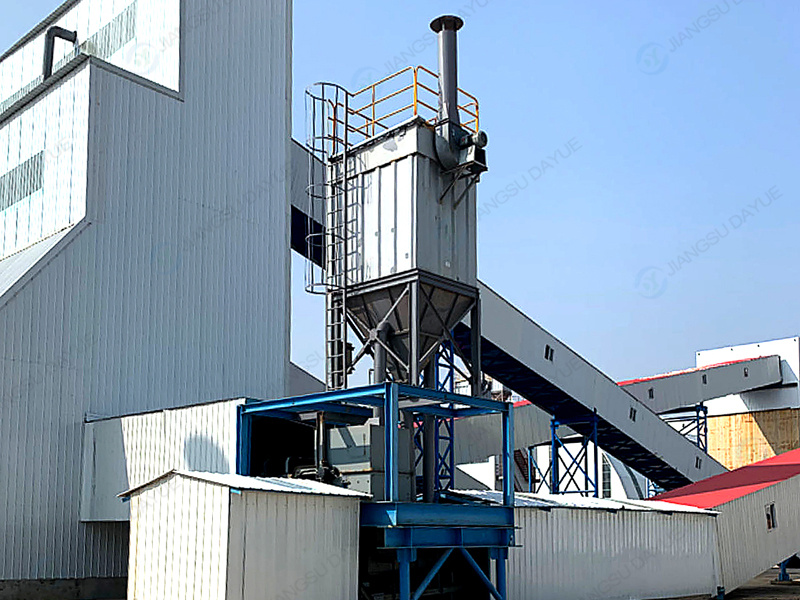
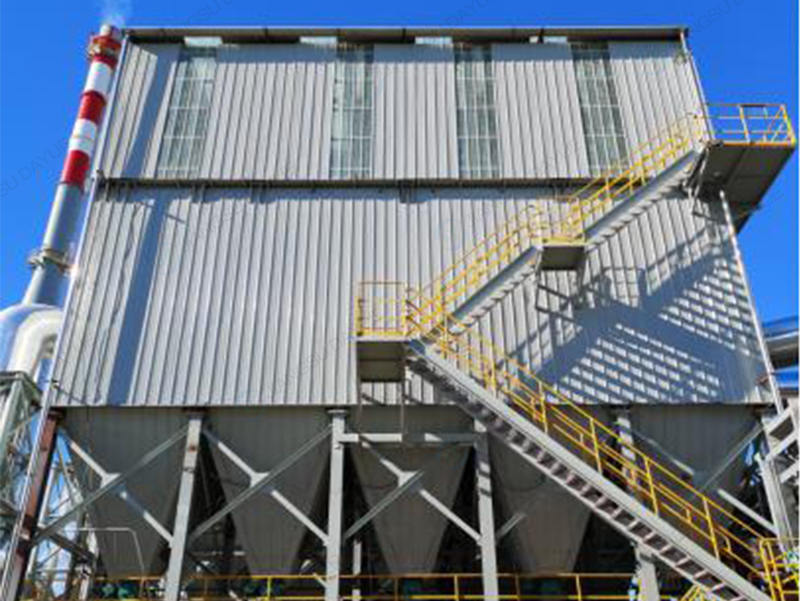
Bag filter is an efficient dust removal equipment widely used in industrial production for dust control. The following is an introduction to bag filters:
1、 Working principle
Bag filter mainly relies on filter bags to filter dusty gases, thereby achieving the separation of dust and gas. The dusty gas enters the dust collector through the air inlet and is evenly distributed into each filter bag after passing through the guide plate. When the gas passes through the filter bag, the dust is trapped on the outer surface of the filter bag, while the purified gas is discharged from the inside of the filter bag through the air outlet.
With the continuous accumulation of dust on the surface of the filter bag, the resistance of the dust collector gradually increases. When the resistance reaches a certain value, dust cleaning operation is required. The cleaning methods usually include pulse blowing, reverse blowing, etc. Pulse blowing is the use of compressed air to instantly release shock waves, causing the filter bag to rapidly expand and contract, thereby shaking off the dust on the surface of the filter bag; Reverse blowing is achieved by changing the direction of the airflow, causing the filter bag to expand and contract in the opposite direction, in order to clear the dust.
2、 Structural composition
Box: The outer shell of a bag filter, divided into an upper box, a middle box, and a lower box. The upper box mainly includes air vents, maintenance doors, etc; The middle box is the installation area for the filter bag; The lower box includes air inlet, ash hopper, etc.
Filter bag: It is the core component of bag filter, made of high temperature resistant and corrosion-resistant fiber materials. The shape of filter bags can be circular, flat, etc., and their filtration accuracy and service life depend on the material and process of the filter material.
Dust cleaning system: including pulse valve, spray pipe, air bag, etc. The pulse valve controls the injection time and interval of compressed air, and the injection pipe evenly sprays the compressed air towards the filter bag, while the air bag stores the compressed air.
Ash unloading system: used to discharge dust from the ash hopper, usually composed of ash unloading valves, conveyors, etc.
Control system: Automatically controls the operation of the bag filter, including dust cleaning control, temperature control, pressure control, etc.
3、 Advantages
High dust removal efficiency: The filtration efficiency for fine dust can reach over 99%, which can meet strict environmental requirements.
Strong adaptability: It can handle dusty gases of different properties, including high temperature, high humidity, corrosive gases, etc.
Stable and reliable operation: simple structure, easy operation and maintenance, low failure rate during operation.
Small footprint: Compared with other dust removal equipment, bag filters have a smaller footprint and are suitable for installation in places with limited space.
4、 Disadvantages
The lifespan of filter bags is limited: filter bags are affected by factors such as wear and corrosion during use, and need to be replaced regularly, which increases operating costs.
Limited adaptability to high-temperature gases: When dealing with high-temperature gases, cooling measures or high-temperature resistant filter media need to be taken, otherwise it will affect the service life of the filter bag.
High resistance: The resistance of bag filters is relatively high and requires a certain amount of energy to overcome it.
5、 Application Fields
Power industry: used for boiler exhaust dust removal and coal powder preparation system dust removal in thermal power plants.
Metallurgical industry: dust control in the smelting process of steel and non-ferrous metals.
Building materials industry: dust removal in the production process of cement, lime, ceramics, etc.
Chemical industry: Dust collection during the production and processing of chemical raw materials.
Mining industry: dust removal during processes such as ore mining, crushing, and screening.
Related Products



.jpg?x-oss-process=image/resize,w_100/quality,q_100)


Contact US
Product Information
Quantity
Unit
Piece
Support order samples, customization, wholesale direct, and complete payment. If the product you look for does not have corresponding customized content, pls fill out the form below to contact us, and we will reply ASAP.