
Hengrui Environmental Technology Co., Ltd.
Introduction to Hot Blast Stove
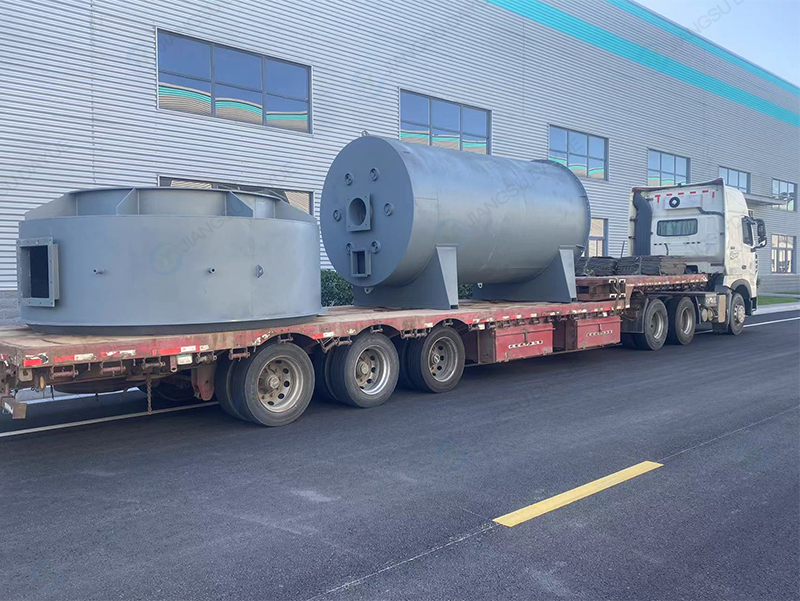
A hot blast stove is a type of thermal power machinery that can heat the air to the required temperature. The following is a detailed introduction about the hot blast stove:
working principle:
Indirect: The heat generated by fuel combustion is transferred to the air through a heat exchanger, heating the air to form hot air. For example, when using steam, thermal oil, flue gas, and other carriers to heat air in various forms of heat exchangers, indirect hot air stoves are often used in industries such as milk powder, pharmaceuticals, synthetic resins, etc. where the dried material is not allowed to be contaminated or sensitive to temperature.
Direct type: The fuel is directly burned and treated with high purification to form hot air, which then comes into direct contact with the material for heating, drying, or baking. This method consumes relatively less fuel and can be used without affecting the quality of the dried products. It is commonly used in situations where higher temperature drying or baking operations are required. However, this type of hot air stove cannot be used for heating purposes such as farming. classification
By fuel type: there are hot blast stoves such as coal-fired, oil fired, gas-fired, biomass, etc. The characteristics of hot air stoves with different fuels vary. For example, coal-fired hot air stoves have low fuel costs but high environmental requirements; Gas hot blast stove has high combustion efficiency, cleanliness and environmental protection, but it has requirements for gas supply; Biomass hot blast stoves are more environmentally friendly and use renewable biomass fuels.
According to the method of adding coal, it can be divided into two types: manual burning and machine burning. Hand burning operation is relatively simple, but it requires high manual labor intensity and has relatively low thermal efficiency; The machine burning type has a high degree of automation, uniform coal addition, and high thermal efficiency.
According to the output air temperature, it can be divided into high-temperature furnaces, medium temperature furnaces, etc. The output air temperature of the high-temperature furnace is relatively high, suitable for processes with high temperature requirements; Medium temperature furnaces are suitable for general heating, drying, and other needs.
According to the conveying form: there are indirect and direct types. Indirect heat transfer through a heat exchanger results in relatively clean hot air; The hot air after direct fuel combustion comes into direct contact with the material, with high heat transfer efficiency, but it may have a certain impact on the material.
According to the arrangement of the heat exchanger, it can be divided into combined and separated types. The combined heat exchanger has a compact layout with other components and occupies a small area; The separated heat exchanger is arranged separately from other components for easy maintenance and repair.
Structural composition:
Combustion chamber: It is a place where fuel is burned, and its structural design should ensure that the fuel can burn fully and generate sufficient heat.
Heat exchanger: It is the core component of a hot blast stove, used to transfer the heat generated by fuel combustion to the air. The material, structure, and heat transfer area of the heat exchanger directly affect the thermal efficiency and performance of the hot blast stove.
Fan: Used to draw cold air into the hot air stove and deliver the heated hot air to the desired location. The parameters such as air volume and pressure of the fan should be selected according to the power and usage requirements of the hot air stove.
Chimney: Used to discharge the exhaust gas generated by fuel combustion, its height and diameter should be designed according to environmental requirements and the amount of exhaust gas generated by combustion.
Control system: used to control the operation of the hot blast stove, including fuel supply, fan start stop, temperature regulation, etc. The higher the automation level of the control system, the more convenient and stable the operation of the hot blast stove.
Efficient and energy-saving: It can quickly convert the chemical energy of fuel into thermal energy, with high thermal efficiency, which can effectively reduce energy consumption and operating costs.
Accurate temperature control: The temperature of the hot air can be precisely adjusted according to different process requirements, ensuring the stability of the production process and product quality.
Wide application range: widely used in various industries such as chemical, pharmaceutical, coating, textile printing and dyeing, casting, building materials, agricultural product processing, heating, etc.
Stable and reliable operation: The structure is relatively simple, with a low failure rate during operation and low maintenance costs.
Disadvantage: Environmental pollution: Some fuels will produce pollutants such as exhaust gas and waste residue after combustion, which will have a certain impact on the environment. However, with the increasing demand for environmental protection, current hot air stoves are also constantly improving in terms of environmental protection.
Large volume: For some small production sites or places with limited space, the installation and use of hot air stoves may be restricted.
Unstable hot air temperature: In some cases, the temperature of the hot air may fluctuate due to factors such as fuel supply and combustion conditions.





Contact US
Product Information
Quantity
Unit
Piece
Support order samples, customization, wholesale direct, and complete payment. If the product you look for does not have corresponding customized content, pls fill out the form below to contact us, and we will reply ASAP.